
2026 Ford Transit 150 vs 250 vs 350 Comparison
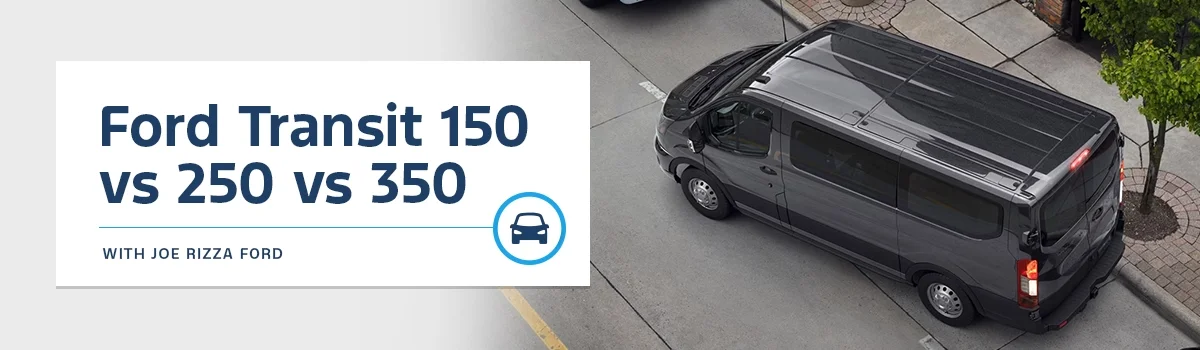
The Ford Transit is available in a huge range of configurations, but there are three basic model designations: the Transit-150, Transit-250, and Transit-350. The principal difference between these configurations is the amount of weight each is able to handle. While there are a number of other factors, such as roof height, wheelbase, engine choice, and more, these all fit under those three basic configuration types. Read on for a more detailed breakdown of these Transit configurations.

2026 Ford Transit 150 Vs. 250 Vs. 350 At A Glance
Configuration |
Max GVWR |
Max Payload |
Best Suited For |
T-150 |
Up to 8,800 lbs. | Up to 3,796 lbs. | Light delivery, service businesses, lighter upfits |
T-250 |
Up to 9,150 lbs. | Up to 4,146 lbs. | Contractors, equipment hauling, medium-duty commercial use |
T-350 |
Up to 9,500 lbs. | Up to 4,496 lbs. | Heavier cargo, substantial upfits, demanding commercial applications |
T-350HD |
Up to 11,000 lbs. | Up to 5,103 lbs. | Very heavy cargo or upfits, towing applications |
While it might seem like these are trim levels, like you might see on passenger vehicles, the difference here is all about weight. For each of these configurations, wheelbase, engine choice, and roof height will have an impact on GVWR and payload capacity, but each one still has a distinct maximum that sets it apart from the others. The sort of payload you intend to carry is therefore the biggest factor in choosing which configuration is right for you.
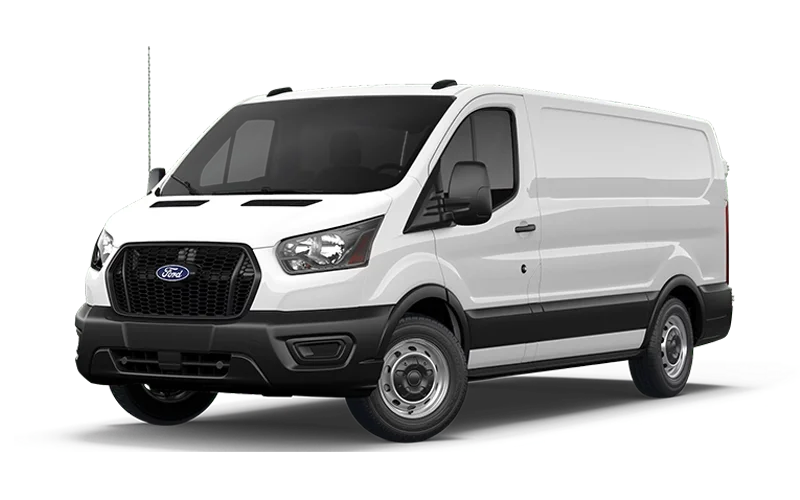
2026 Ford Transit-150: Best for Lighter-Duty Work
The 150 has the lowest capacity of the three configurations, but is ideally suited for jobs that require a lot of cargo volume, but the cargo being carried isn’t especially heavy. This can be applications like florists, parcel delivery, mobile service technicians, cleaning companies, and lighter trade upfits. The 150 isn’t available with either the high roof or the extended body, so it’s better for navigating tight corners or low clearances.
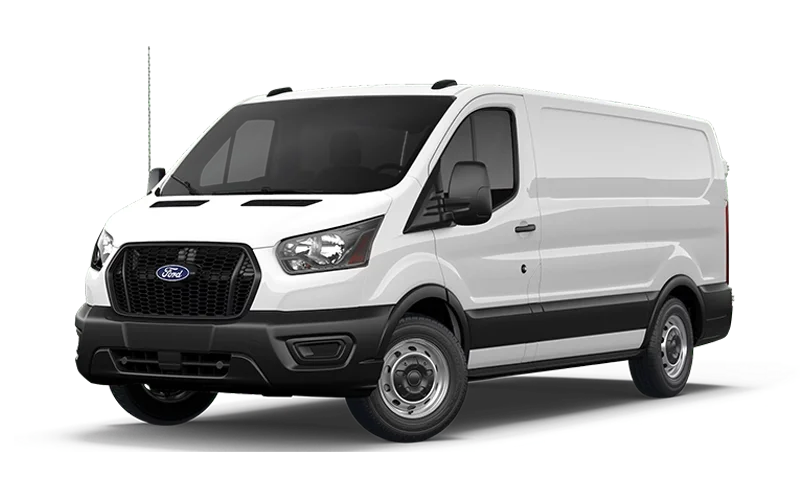
2026 Ford Transit-250: The Middle-Ground Work Van
The 250 is generally the sweet spot for a large cross-section of applications. It is available in any of the three available roof heights and any of the three available body lengths, giving you a lot more options for how you carry your cargo, whether that means more shelves, bins, partitions, generators, or compressors. The 250 is popular with electricians, HVAC contractors, plumbers, construction crews, and bigger delivery operations.
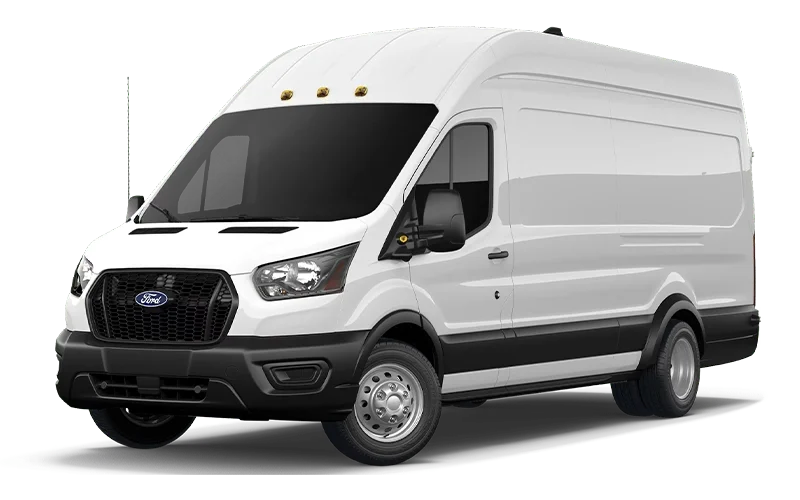
2026 Ford Transit-350: Best for Heavy Loads and Major Upfits
The 350 has the highest capacity of any of the Transit configurations. It is available in all of the same body styles as the 250, but adds a dual-rear-wheel option to the list. There is also the 350HD, which bumps up GVWR and payload capacity to the absolute maximum. While the 250 will fit just as much cargo inside, the 350 is the choice for when that cargo is also heavy. It’s also the best fit for heavier specialized conversions, like armoring.

What the Transit 150, 250, and 350 Have in Common
Engine / Wheelbase |
Max Towing RWD |
Max Towing AWD |
3.5L PFDI V6 / 130 inches |
6,400 pounds | 6,200 pounds |
3.5L PFDI V6 / 148 inches |
6,300 pounds | 6,100 pounds |
3.5L EcoBoost V6 / 130 inches |
6,900 pounds | 6,700 pounds |
3.5L EcoBoost V6 / 148 inches |
6,800 pounds | 6,600 pounds |
There are a number of features that are the same across the whole Transit configuration lineup. The drivetrain is where this is most obvious. All versions of the Transit come with a 10-speed automatic transmission with standard rear-wheel drive or available all-wheel drive. The same two engines are also available on all three configurations as well. All three are available with either a 130-inch or 148-inch wheelbase, and this, together with the choice of engine, is what determines towing capacity, not whether you choose the 150, 250, or 350. These similarities make it easier to choose a configuration that’s right for you, since you don’t need to worry about the availability of the drivetrain you want.
FAQ
The primary difference between these configurations is GVWR and payload capacity.
No, the same two engines are available for every configuration of the Transit.
The 250 is usually the preferred choice of contractors, but those who need to carry especially heavy cargo should consider the 350.