

Charging Your Ford F-150 Lightning Electric Truck
There is no shortage of praise for the Ford F-150 Lightning, thanks to the no-nonsense, gimmick-free approach to building this highly functional electric truck. This has also made the F-150 Lightning quite popular, and many of the people buying them are first-time electric vehicle owners. For those who haven’t owned an electric vehicle before, there are a few important things to learn in order to get the most out of the revolutionary F-150 Lightning, and one of those concerns charging. This charging guide lays out all of the crucial charging information you’ll need.
EV Charging Levels Explained
Charging an electric vehicle can be as simple as plugging it into a normal 120-volt outlet in your garage, and as involved as driving to a public DC fast-charger and paying the provider directly to charge at that location, usually at some rate (like 30 cents) per kWh that is transferred to your vehicle. We refer to these different ways to charge an EV as “Levels” of Charging, and there are 3 main Levels of Charging a Ford F-150 Lightning.
Level 1 Charging
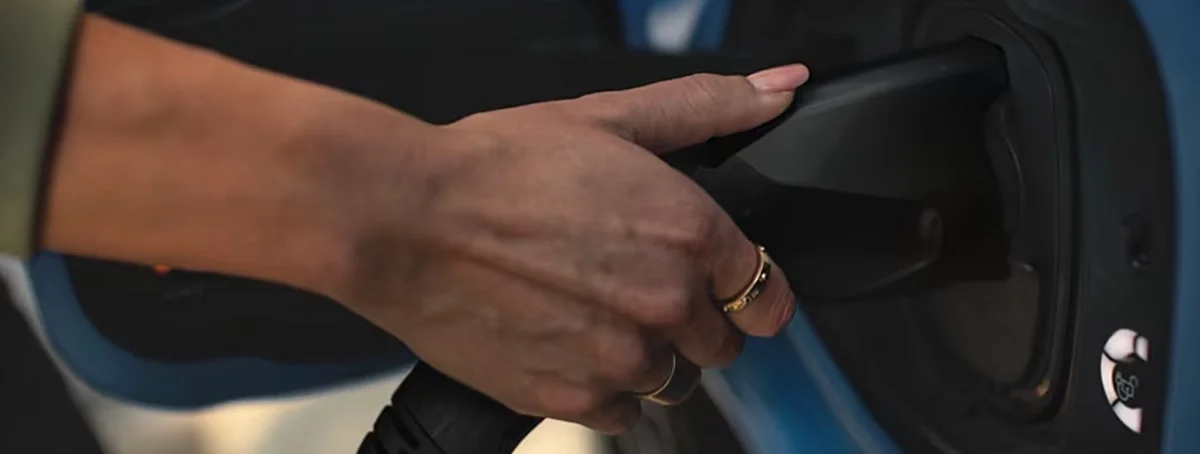
Level 1 charging is essentially a fancy name for plugging your electric vehicle into a regular 120V wall socket. This type of charging has its advantages -chiefly that these types of outlets are all over the place, and you probably already have multiple of them installed in your garage. For convenience, you can’t beat Level 1 charging. However, this provides a fairly low voltage for EV charging, and thus it takes a very long time to fully charge. In fact, it takes so long that it’s only recommended for people who drive less than 20 miles a day. Overall, you would likely find EV Ownership quite frustrating if you had no other option but to rely on Level 1 charging.
Level 2 Charging
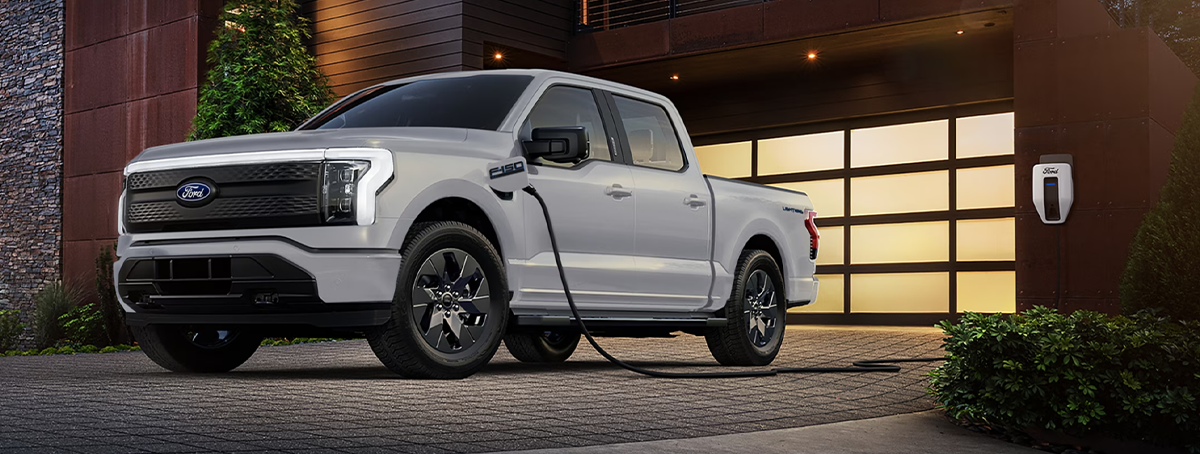
When the industry refers to “EV Charging”, they are usually referring to Level 2 charging. Most public chargers, including the majority of the 111,000 chargers in the BlueOval Charge Network, are Level 2 chargers. This also includes pretty much 100% of all home charger stations, which is where the overwhelming majority of EV charging takes place. Level 2 charging works at 240 Volts, double that of Level 1, and most Level 2 CHargers also utilize an actual EV charger cord, which further allows for even faster charging.
There are two Level 2 chargers sold by Ford, specially designed for use with Ford vehicles. The first of these is the Ford Connected Charge System, which will work with the F-150 Lightning, but is designed more for use with models with smaller batteries. The Ford Charge Station Pro is designed specifically for use with the F-150 Lightning, and for trucks with the Extended Range battery, it will add roughly 30 miles of range per hour of charging, as opposed to 20 miles for the same truck over the same period. The Ford Charging Station Pro is also bi-directional, allowing you to use your F-150 Lightning as a battery backup for your house in the event of a power outage.
There are non-Ford options for Level 2 charging, including a wide variety of public chargers. There is also the option to charge from a NEMA 14-50 AC outlet, the kind you would plug an electric stove or other kinds of home appliances into. Since these operate at a 240V AC current, this is also considered Level 2 charging, and a lot of people who already have these installed in their garage don’t really see the point in installing a dedicated charger. While this is considerably better than using a 120V outlet, it’s still not going to be as fast as using a charging station designed specifically for your vehicle, and if you need to have something installed either way, it’s definitely better to go with the Ford Charge Station Pro. Ask about home chargers when you buy your vehicle, our sales staff has all of the information you need.
Level 3 Charging
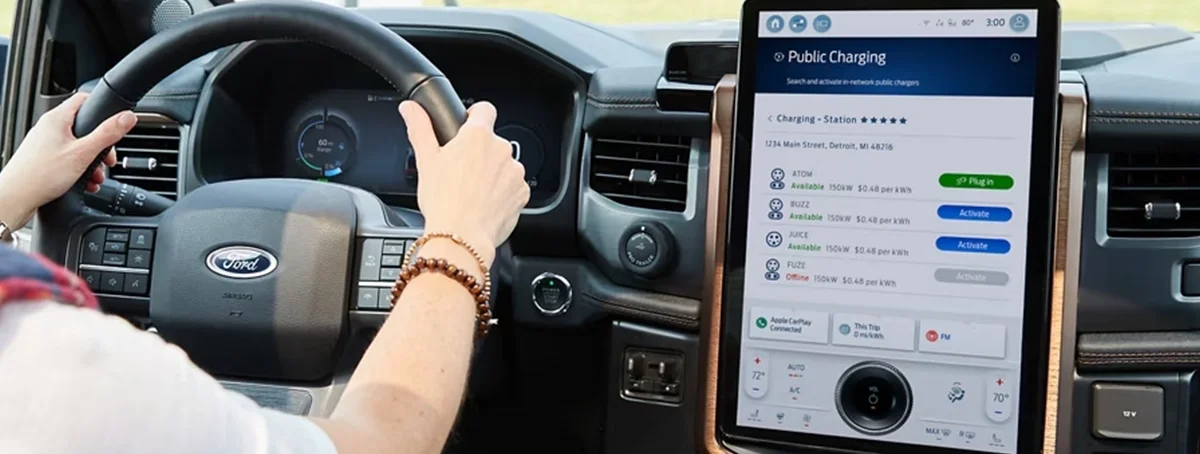
Level 3 charging is usually referred to as DC fast charging, and it is by far the quickest way to charge an electric vehicle. These are less common than Level 2 public chargers, and there are a couple of reasons why. The first is electrical infrastructure. Essentially, this type of charging draws so much power that typical home electrical systems can’t handle it, meaning all Level 3 chargers are public chargers.
What truly differentiates Level 3 Charging from Level 1 or Level 2 Charging however, is the location where AC Power (the kind of power on the electrical grid) is converted to DC Power (the kind of power held by batteries). Level 1 and Level 2 charging convert AC Power from your home or public charger to DC Power through the vehicle’s on-board charger, which is a time-consuming process. At a Level 3 Charger, this conversion takes place in the charging station before power is delivered to the vehicle - allowing it to bypass the limitations of the vehicle’s on board charger and deliver more power in a shorter period of time.
You may also have heard claims that DC Fast Charging negatively impacts the life of your battery, but studies* have proven that even if the ONLY type of charging used was DC fast charging, the difference in the rate of decline of the vehicle battery as compared with Level 2 charging is minimal, and owners should not be too concerned that DC Fast Charging will significantly shorten the life of their battery. As a matter of fact, all electric vehicles have an advanced Battery Management System (BMS) which is specifically configured to prevent damage to the EV battery. The BMS controls the rate at which your battery accepts a charge, and can lower the rate of charge to protect the battery.
FordPass And Electric Vehicles
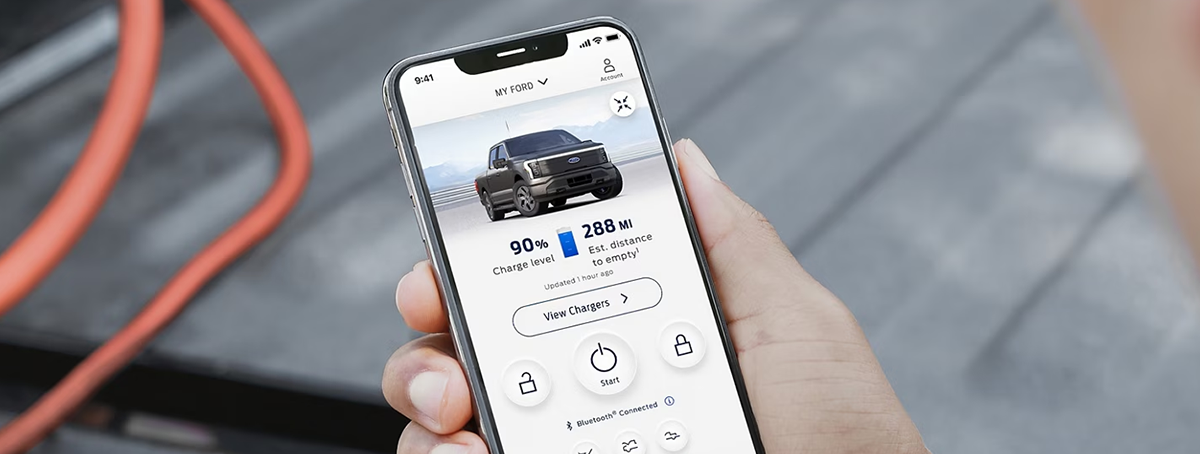
There are a number of EV-specific features that Ford offers for electric models, such as a navigation system that gives you the most efficient route, or one that will allow you to top up your battery on longer trips. But perhaps most useful of all is the FordPass app. This app is loaded with useful features no matter which Ford vehicle you own, but there are some special features just for electric vehicles. Chief among these is the ability to check battery and/or charging status, but it also allows you to precondition the battery to allow for faster changing in inclement weather. It will also allow you to precondition the cabin, bringing the temperature up or down, depending on the time of year, to whatever you consider to be ideal conditions. You can even use it to turn your phone into your key, letting you leave the key fob at home.
In the highly unlikely event that you run out of battery power before you get home, Ford will cover tows of up to 50 miles, to either your house or to the nearest public charger if you are more than 50 miles from home. And being able to contact Ford Roadside Service right from the app is just one more reason to download the FordPass app for your phone.
* Battery tests conducted by Idaho National Laboratory dated 4/15/2014, and include Capacity and Peak Power tests based on tests from USABC Electric Vehicle Battery Test Procedures Manual Revision 2 . Electric Vehicle Power Characterization test adapted from the Hybrid Pulse Power Characterization Test from the FreedomCAR Battery Test Manual for Power-Assist Hybrid Electric Vehicles.